

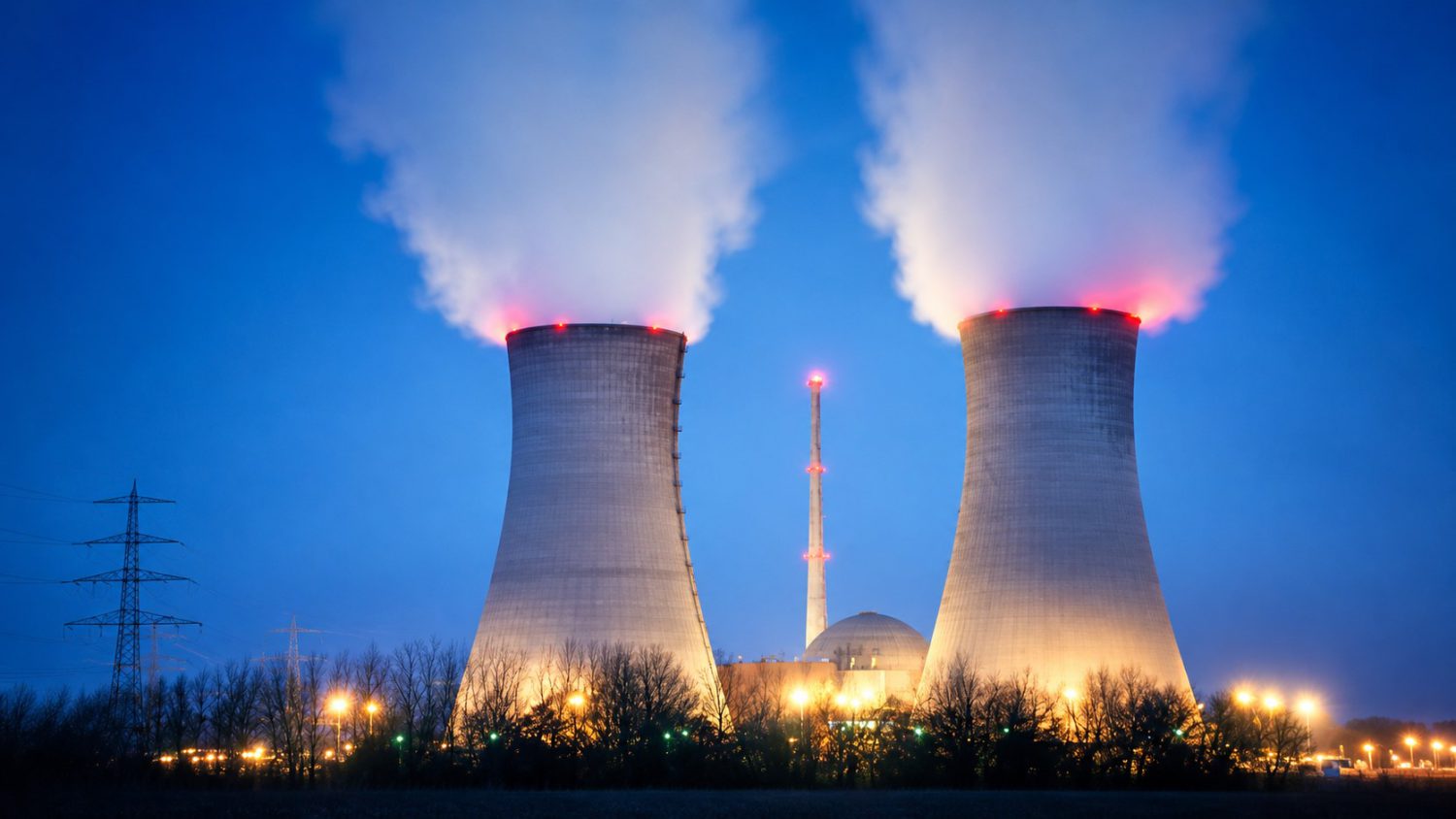
Four billion metric tons of uranium sit dissolved in the world’s oceans right now, roughly 1,000 times the total identified in hard-rock mines worldwide. A US startup called Fluxnium just emerged from stealth with a plan to get at it, backed by $7 million in seed funding and chemistry licensed from the US Department of Energy.
The catch: extracting that uranium currently costs more than twice the market rate, and no one has proven it works at commercial scale.
The timing matters. Yellowcake prices have risen approximately 75% over the past five years, according to US Energy Information Administration data. US policy discussions target tripling nuclear capacity by 2050, yet the country imports the overwhelming majority of its uranium from a short list of geopolitically exposed nations.
We’re already generating electricity with renewables and the prices keep coming down.
What we need to replace is the 80% of our energy use that is currently ONLY serviceable with oil. For instance, batteries are too fucking heavy to run an airplane.
We need to look past ways to generate energy and starting thinking of ways to conserve it–public transit, railways, sail-powered tankers, denser housing, etc.
I was just learning about Japanese houses on youtube the other day. Instead of heating their entire fuckijng enormous house all the time, the traditional Japanese home has a space heater in ONE room and everyone in the family hangs out in that room.
That’s the direction we need to be moving–changing how we live our lives instead of trying to engineer a future built on the inherited expectations of 2 centuries of cheap energy. And this goes beyond habit, it goes into how we build everything.
We might be able to cover a large swath of airplane trips in the near future if all these companies claiming to be coming out with solid state batteries in the next couple years comes true.
We have the solution already. Its called SAF (sustainable aviation fuel). It is possible to fly 100% with zero petroleum jet fuel. Its been done a few times as demonstrations in passenger airliners. There are two problems, but both have solutions:
Gaskets - Petroleum jet fuel has certain naturally occurring compounds which compliment currently used rubber seals. SAF doesn’t have these compounds, but not all rubber seals need them, just the most commonly used. Future planes are being built that don’t use the old seals but there’s a huge fleet of planes that still use the old seals in use. So this problem has a solution, and time will largely solve it as old airframes age out and are replaced by new ones.
Expense - SAF is a good chunk more expensive that petroleum jet fuel. Thats it though. Its expensive. It will mean higher cost for operating an aircraft and that has economic consequences.
Sorry, I think casual air travel is one of those things that’s only possible with cheap energy provided by oil.
SAF is only economically approachable because nobody wants it because oil is cheaper. If we were in a situation without oil, SAF, biodiesel, etc., would immediately get smacked with a demmand curve making it unaffordable.
It’s like how you can run your car on fry grease scavenged from fast food dumpsters, but everyone can’t.
We’re saying the same thing on this point with both our posts. You’re saying “use rail instead of flying because batteries can’t fly a plane”. I’m saying "if we remove petroleum, the cost of jet travel will be substantially higher and consumers will seek a cheaper alternative (which may end up being rail). "
Sure, but you’re going whole hog to the “conserve” approach, which I agree is a component, but may not be the full or best answer. My suggestion would drastically increase solar power far far beyond our current electricity needs to create liquid SAF fuels directly from electricity and basic CO2/water inputs (aka Power-to-liquids). Theres a plant in Washington state doing exactly this.
I see that as too short sighted. Take the longer view. Fry grease is a very easily available and low transformation source of energy. There are other sources of energy that are a level more harder to get, and a level of more transformation needed to be usable in our chosen application.
With scarcity (artificial or natural) and scale we would see switches to these other forms of non-petroleum energy. I’m not saying its an overnight thing, but I don’t think you are either with your proposals.
Interesting. Thanks for the info!
I did a little digging and it looks like E-Fuels are outrageously expensive to produce, that is to say, the electricity would be better put into a battery; but for all the cases where that’s infeasible it could be last ditch option.
With any technology humaity has for the forseeable future, no amount of battery storage will enable commodity transatlantic air travel.
I’m also talking about installing enough solar to eclipse beyond what all of our batteries can hold.
I wrote:
You wrote:
OK. Glad we agree.
That’s still worse than abandoning flying by and large.
While on the surface being CO₂ neutral, SAF contributes to climate change, because the airliner emissions are in a part of the atmosphere (several km above ground) where the CO₂ has a bigger effect on climate than the CO₂ would have where it was captured (~ground level).
That is if I remember correctly what I read about it some time ago and given the source was reliable. It made sense to me when I read it…
edit:
I don’t intend to let “perfect be the enemy of good”.
It’s more like we got used to a lot of things and sometimes don’t question them radically enough.
A bit of greenwashing here and there just isn’t good enough, if we want to save what’s left of the climate we knew.
Do you think humanity, as a whole, is going to abandon flying? I certainly don’t. So the best solution is to make changes to limit the behaviors and modify the behaviors to cause less harm. Again, this is just one component of a larger solution, but its a good one to address what air travel still needs to occur.
We’re already beyond that. We’re not getting that back.
Great points.
I’d also add that, if you live alone in an apartment, an electric blanket is the best. They’re cheap, work great, and use very, very little electricity.
Yeah, let’s take my condo, for example. I have a 2 bedroom with a big inteconnected dining/kitchen/living area. There are only doors to the bedrooms or the bathroom. With no way to subdivide the living areas, the bedrooms are the only practical place to hidey-hole in the winter.
So let’s see the problems there:
Frozen pipes. The rule of the condo (not guideline, rule) is thermostats are set no lower than 55 degrees F. Now pipes freeze at 32, so that is a pretty outrageous amount of manadatory wiggle room --23 degrees. I honestly don’t know enough about plumbing or insulation to suggest a fix, but I will note that there is no plumbing inside my ground floor apartment that touches an outside wall, so I bet I could get pretty darn close to 32 in any room without bursting pipes, but I do so at a pretty high risk.
So I’m hiding in the bedroom, the only room with a door. Why is the space taken up by a frame, boxspring, and matress that is used for only 8 hours a day, and why is everyone sleeping in fucking full size mattresses instead of a twin if they live alone? Honestly, I never understood it.
Japanese solution is a roll up mattress; the western solution is the much more complicated and expesnive and permanent murphy bed. I think any homeowner can replace their full size matress with a twin, or a bed with a roll-up mattress, or a bed with a futon, so that’s pretty easy.