

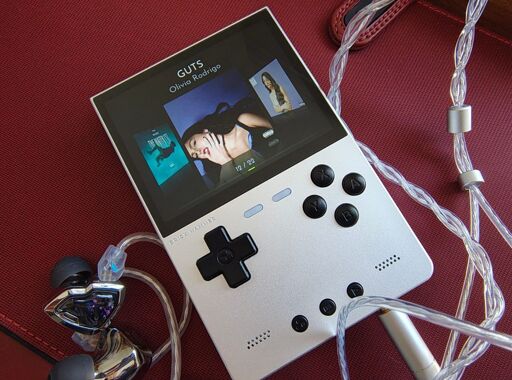
I was looking at dedicated audio players recently, which are apparently called DAP (Digital Audio Player). As far as I understood, they basically use a special chip for audio playback which gives you a high-quality audio output, so the only limiting factor would be the headphones you are going to use.
I am now wondering two things:
- Does the TrimUI Brick actually have a special chip for „enhanced“ audio output, or what is it about this retro handheld out of many that makes it so special for audio playback?
- Is going for a dedicated DAP like the Mechen M30 actually worth it (given good cable headphones), or wouldn’t I even notice a difference in audio quality compared to my TrimUI Brick?
Hi there!
The Brick Hammer does not have any DAC output, no. They’re wonderful to have as a retro handheld which also plays music, but as a device dedicated to high quality audio, you’re far, far better opting for a dedicated DAP.
The M30 you mentioned has:
- AKM AK4376: the main DAC. It’s a 32-bit stereo DAC from Asahi Kasei Microdevices, with an integrated Class-G headphone amplifier and support for sample rates up to 384 kHz. Manuals+
- JuLi2167: the DSP / audio decoding processor. Manuals+
- WM8965 and TPA6530: “dual decoding” or “dual DAC” arrangement.
While they’re not like…industry leading, compared to the Brick Bro, it will sound like a Lamborghini! But as you say, this will depend on the earpods you get. I’d recommend some nice IEMs! Even Moondrop Chu II’s are reaaaally cheap but give you a great sound :)
I’ve been spending a bunch of time with TortOS, the new custom firmware for the TrimUI Brick and Brick Hammer, so I chatted with its developer Geekstrada, who also works with Helaas on Leaf for the Miniloong Pocket 1.
My article goes into why he wanted TortOS to be deliberately small and focused, the Cover Flow-inspired UI, how he keeps emulator cores ready in memory to make launching games so fast, and why he’d rather support fewer systems really well than chase everything the Brick can technically run.
We also talk quite a bit about Muse, its lovely music side, and the old iPods and physical music collections that helped inspire it. I’ve been using my TortOS set-up with just three games per system and filling the rest of the card with music, which ended up feeling like a pretty perfect fit for what TortOS is trying to do.


Anyway, if you’re at all curious on this new firmware, or the dev side of it, then hopefully you like the article :)
