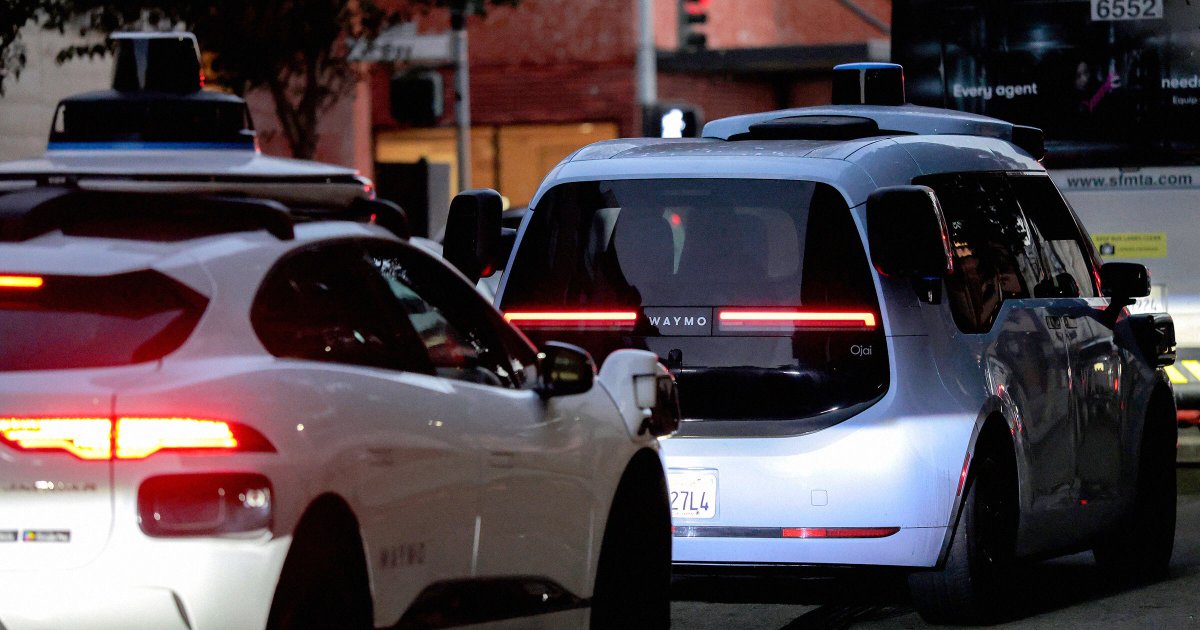
Yes, that was the plan all along. Uber intended to be a robotaxi company, but self-driving car technology was not ready. They launched with human drivers to build up market share. The plan was always to funnel profits from ride-shares into self-driving cars and then start replacing human driven cars with robots, where it would be profitable.
Enshittification in a nutshell.
Uber spent a decade telling cities that protecting taxi drivers was anti innovation. Now that robotaxis threaten its own business, suddenly limits on new competitors sound reasonable. Amazing how quickly »disruption« becomes »regulation« when the disruption reaches the boardroom.
If you’re in an area served by Fare… https://www.fare.coop/
deleted by creator
In this case, the advantage is that autonomous vehicles have the real possibility to be significantly safer than human drivers (with some obvious exceptions - looking at you, Tesla).
I remember watching a video showing how increased reaction speed can virtually eliminate traffic jams (I believe it was this one?). It’d require nearly all vehicles to be automated, but someday city traffic might flow smoothly even during the busiest of rush hours.
Anything but trains
Many cities have public transit in the form of busses and/or subway systems, but regular street traffic still exists and car ownership has so much cultural inertia that it’ll probably take decades to wean people off of them.
However, that doesn’t mean we should refuse to improve cars in the meantime just because they’re not the transport solution we’d prefer.
I understand that. I just found it houmous how similar self-driving cars all diving at a set speed to “eliminate traffic” would be to trains.
I keep forgetting that trains stop in front of every building!
I’m sure self-driving cars stopping in front of every building would solve traffic. /s
Last-mile runs to and from transit stations would.