

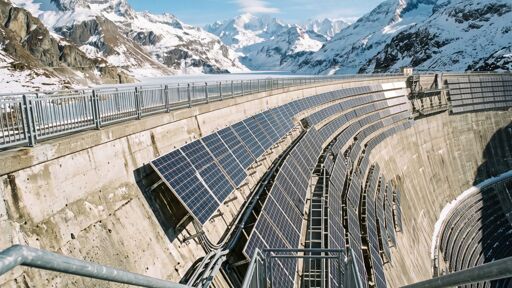
Up on the dam, almost everything that looks like a problem becomes an advantage.
The plant sits above the fog line, in thin, clear air that lets far more sunlight through.
The higher you go, the stronger and cleaner the sunlight becomes.
Cold actually helps, because solar panels work more efficiently when they are not baking in heat.
And then there is the snow, which acts like a giant mirror, bouncing extra light up onto the panels from below.
Scientists call it the albedo effect, and it can lift a mountain plant’s output well beyond anything possible in the valley.
A test site at a similar height recorded yearly output far above a typical Swiss plant.
I tried (but not very hard) to check what the highest altitude dam in the world is, but searches kept giving me the tallest dams instead. But, for anyone who’s wondering, I also looked up what the highest altitude solar farm in the world is, and it turns out it’s the Huadian Tibet Caipeng project, at 5,228 meters (17,152 feet) above sea level on the highest plateau in the world. I have to wonder if snow accumulation outweighs the benefits of the lower temperatures and thinner atmosphere.
usually snow slides off solar panels fairly easily since they are smooth, tilted, and absorb heat.
It can build up overnight though, so I think the question remains valid.
deleted by creator
